

 Salesforce
 HubSpot
 Claude
.png?width=58&height=58&name=Frame%202087327944%20(1).png) GA4
GA4
.png?width=58&height=58&name=Frame%202087327944%20(2).png) Marketo
Marketo
.png?width=58&height=58&name=Frame%202087327944%20(3).png) Audit Fox
Audit Fox
 Services


Marketing Ops teams are struggling because building campaigns is still trapped in a world of clicks, menus, and endless configuration.
However, AI is rapidly rewriting how campaigns are created by making clicks irrelevant. The emerging reality is, campaign Ops is becoming a conversational discipline, where prompts replace processes and intent replaces manual execution.
This shift is bigger than “AI helping with copy” or “AI assisting segmentation.” We’re moving toward systems that understand the outcome you want and build the campaign for you, end to end.
How cool is generating List logic, conditional branches, timing, tokens, QA, naming standards, UTMs, etc., from a single instruction?
For teams drowning in repetitive tasks, this is a structural rewiring of how GTM teams operate.
And the organizations that adapt to conversational Campaign Ops will move exponentially faster because they eliminate the work that no longer needs a human in the loop.
This is the moment Campaign Ops stops being a “build engine” and becomes a strategic interpreter between GTM intent and system execution.
Goodbye clicks, hello commands: Campaign Ops enters its voice era
Campaign Ops has always moved at the speed of manual execution. Every campaign requires a chain of actions inside a MAP that needs you to build the list, create the assets, clone the workflow, adjust the logic, fix tokens, and manage QA.
Each step lives inside a maze of menus and configuration paths that slow teams down.
AI is reshaping the relationship between humans and systems. Instead of navigating interfaces, teams are starting to speak directly to their MAPs using natural language prompts, and increasingly, voice.
The rise of voice-based AI isn’t a consumer-only trend. It’s entering enterprise workflows as teams look for faster, hands-free ways to direct complex tasks.
In 2024, 47% of companies adopted voice-driven technologies to streamline customer interactions and internal processes. The global voice market is expected to expand from $9.25 billion to $10.05 billion within the span of a single year.
This shift removes operational drag by turning intent into execution through simple conversation. Instead of clicking through six menus to adjust a nurture, an Ops professional can say:
“Create a 5-step onboarding nurture for free users showing high usage in the first week, and apply standard compliance rules.”
AI understands the intent and assembles the operational components.
MAPs are evolving beyond configuration tools into interpretation engines that learn patterns from:
- Previous campaigns and their structures
- Internal naming conventions and program standards
- Segmentation logic and lifecycle rules
- Engagement patterns that influence routing decisions
This learning gives AI enough context to assemble complex programs from minimal input, including voice commands.
A few areas where this transformation becomes visible:
- The system predicts dependencies such as lists, suppressions, tags, and tracking IDs
- It generates operational components that follow internal standards without reminders
- It applies logic verification and quality checks before presenting the build
- It adjusts routing or timing based on patterns observed across past journeys
Voice-based prompts accelerate these improvements because they reduce the cognitive friction of switching between instructions and interfaces.
The key market indicators reveal that Voice AI is gaining consistent momentum, signaling strong growth and increasing adoption across various industries.
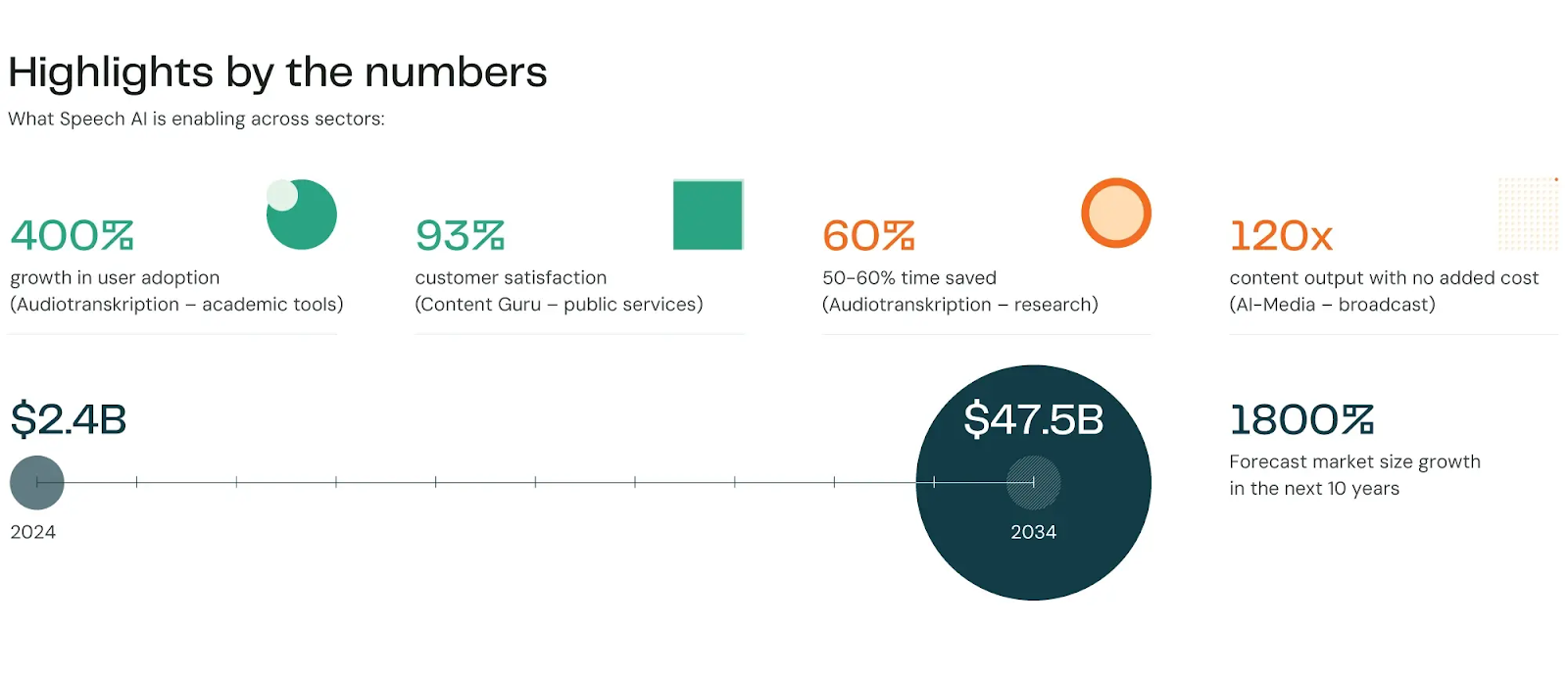
Source: Speechmatics
And with prompts, campaign Ops shifts toward high-precision direction, while AI manages the multi-step execution behind the scenes. After all, there is a strong reason behind why marketing Ops leaders are betting big on AI for campaign automation.
Key Takeaways:
- Voice-based prompting introduces a new layer of speed and accessibility in Campaign Ops, allowing complex journeys to be shaped through simple conversation.
- AI interpretation engines transform MAPs into systems that assemble campaigns with far less friction, creating a faster GTM cadence.
From workflows to words: The rise of prompt-based orchestration
Campaigns are built depending on how well an operator understands the MAP interface. Every step required manual configuration, and accuracy relied on personal experience.
Prompt-based orchestration introduces a new foundation where natural language becomes the primary method of constructing campaigns.
The State of AI survey, which gathered responses from over 1,500+ marketing professionals, highlights the growing integration of AI in marketing workflows. The primary use case is content creation, particularly text-based content (55%).
However, 31% of respondents noted that AI outputs don’t always meet expectations. This suggests that while AI is helpful, its effectiveness largely depends on the quality of the prompts used.
A single prompt can generate segmentation rules, branching logic, timing, and program objectives. The MAP operates like an orchestration engine that converts language into structured workflows.
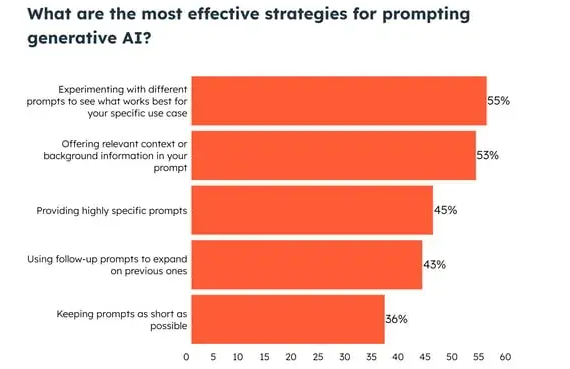
Source: HubSpot
This shifts the cognitive load from remembering where everything lives in the UI to expressing intent with clarity.
And the evolution opens the door to richer campaign logic because prompts encourage operators to think in terms of outcomes instead of mechanics. For example:
- “Create a 4-step nurture for users who visited pricing twice in 7 days and showed intent signals.”
- “Build a re-engagement flow for cold leads from the last 90 days and prioritize contacts with product usage patterns.”
- “Design a webinar follow-up program with two variations based on attendance duration.”
Prompting sharpens strategic thinking. It forces teams to articulate the target audience, desired movement through the journey, and what success looks like.
This approach redefines the required skills in Campaign Ops. The focus shifts toward understanding user behavior, mapping intent to system actions, and shaping clear instructions that guide the orchestration engine.
Key takeaways
- Prompt-based orchestration elevates Campaign Ops into a discipline centered on clarity of intent rather than manual construction.
- This shift encourages a stronger campaign strategy because operators think in terms of outcomes, not interfaces.
Ops as the interpreter: Turning GTM vision into system reality
Campaign success depends heavily on how well intent is translated into system logic. GTM teams often share goals like “increase trial engagement” or “re-activate cold leads,” yet the operational interpretation of these goals varies across marketers, product teams, and sales stakeholders.
Conversational Ops introduces a layer where interpretation becomes deliberate instead of incidental.
Campaign Ops takes on the role of shaping intent before AI executes it. The team defines who qualifies for a journey, which behaviors matter, how progression should work, and what signals indicate readiness for the next step.
This creates a consistent interpretation of strategy that the AI can turn into fully structured workflows.
According to McKinsey, 23 percent of organizations are already scaling agentic AI systems within at least one business function, and another 39 percent are actively experimenting with them, indicating that enterprises are rapidly adopting AI models capable of interpreting human intent and executing multi-step tasks.
However, in any business function, fewer than 10 percent of respondents report that their organizations are scaling AI agents. This presents a window of opportunity to capitalize on.

Source: McKinsey
Interpretation intelligence emerges as a unique advantage once interpretation becomes a defined responsibility instead of a side effect of execution.
This is the accumulated understanding of past campaigns, audience behavior, compliance boundaries, and data conditions that influence how a program should run. Over time, this intelligence becomes a strategic asset that strengthens every new campaign.
This interpreter layer introduces three compounding benefits:
- Clearer decision frameworks because intent is captured in structured language that the AI can reliably follow.
- Improved governance because Ops embeds standards and constraints into prompts rather than adjusting every workflow manually.
- Faster strategy alignment because marketers express direction in their own language, and Ops shapes it into precise instructions that guide execution.
Campaign Ops evolves into a strategic contributor when interpretation becomes intentional. The team influences outcomes at the design level instead of resolving issues during execution.
💡Learn how to create effective lead nurturing campaigns
Key takeaways
- Interpretation intelligence turns Campaign Ops into the strategic layer that shapes how GTM intent is converted into system-ready logic.
- This shift produces more consistent campaigns, stronger governance, and faster alignment across teams.
When campaigns build themselves: The future of AI-native operations
AI-native MAPs are starting to behave less like systems that wait for instructions and more like engines that continuously scan for growth opportunities.
They evaluate funnel movement, compare journey performance across cohorts, and recognize patterns that often go unnoticed by human operators.
This allows the platform to surface moments where a new touchpoint, message, or journey path could strengthen engagement.
For instance, Generative AI helps in running marketing campaigns by automating content creation, personalizing messaging, and analyzing customer data to predict trends.
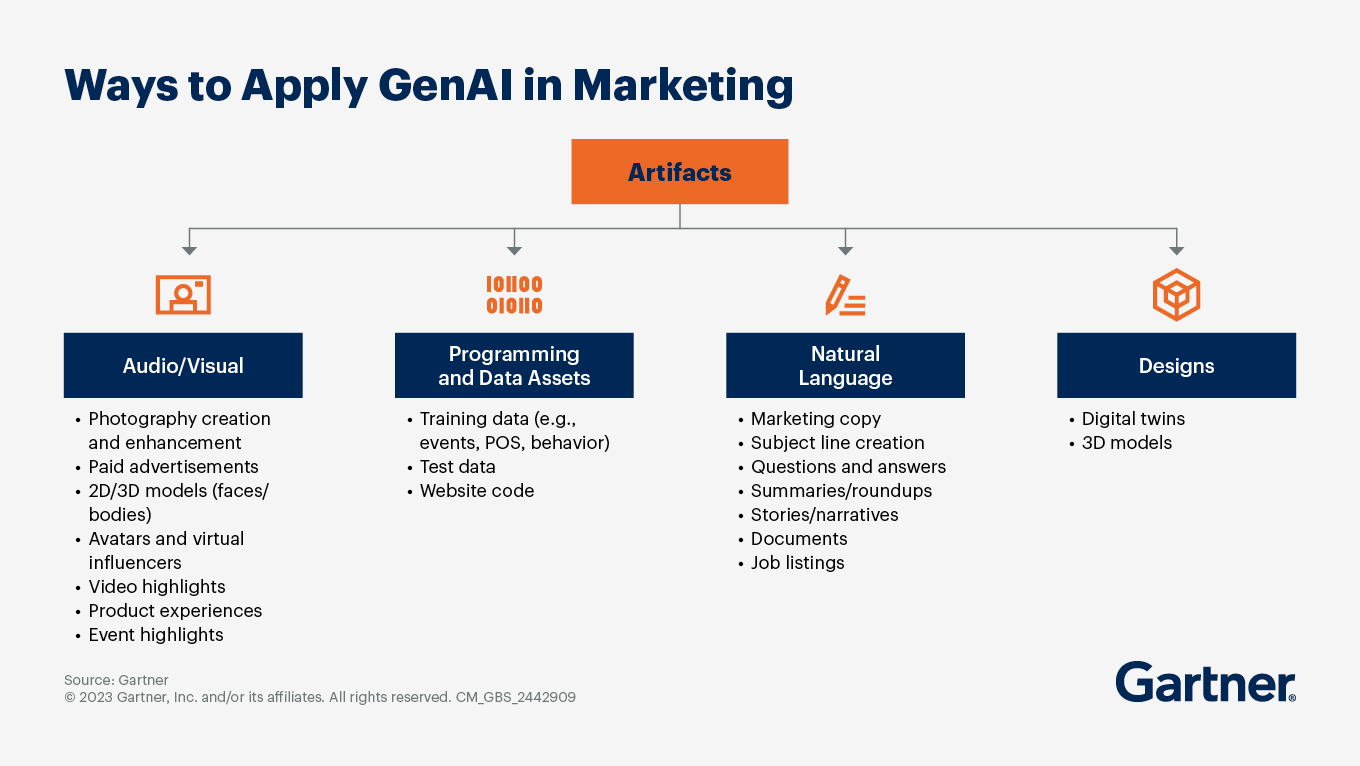
Source: Gartner
AI prompts enable the generation of tailored content, test messaging variations, and optimize campaigns at scale, improving targeting and engagement.
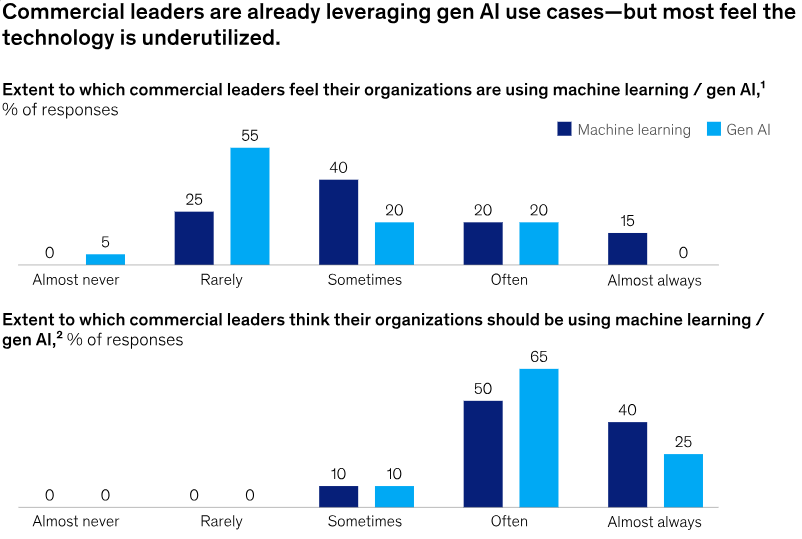
Source: McKinsey
A meaningful shift appears when the MAP begins prioritizing campaigns based on potential business impact. Instead of teams deciding which nurture to build next, the system highlights signals such as:
- Emerging micro-segments showing concentrated product activity
- Shift patterns in trial or freemium users indicate rising intent
- Under-engaged audiences who consistently respond to specific formats
- New conversion paths that outperform traditional journeys
These insights guide Ops toward opportunities with immediate weight, reducing the lag between discovery and action.
AI-native environments also introduce autonomous experimentation. The platform can create controlled variations of a nurture, test new sequencing for a subset of users, and track early indicators.
Once the system detects performance lift, it can recommend scaling the winning variation. This delivers a level of testing discipline that remains difficult to maintain manually.
Another unique development is predictive journey assembly. The system anticipates what a successful journey should include by analyzing historical conversion paths, message types, timing patterns, and behavior clusters.
💡Discover how predictive analytics is reshaping Marketing Ops for scalable growth
It then assembles a proposed journey structure aligned with those insights, giving Ops a starting point that reflects conditions proven to drive outcomes.
Leaders preparing for this shift are building teams capable of evaluating system-generated opportunities, confirming which ones support GTM priorities, and defining the strategic boundaries that keep the AI aligned with brand, compliance, and lifecycle goals.
This creates a new partnership where the system accelerates discovery, and Ops shapes the direction.
Key takeaways:
- AI-native MAPs evolve into systems that detect opportunities, prioritize campaigns, and run controlled experiments with minimal human initiation.
- Campaign Ops gains leverage by guiding, evaluating, and scaling these system-generated insights to drive faster and more precise GTM execution.
Bottom line is, AI-native platforms will soon highlight the next high-impact campaign before anyone on the team identifies the need. And the teams showing enthusiasm in interpreting these prompts from the system will redefine operational speed.
The next frontier lies in understanding how much strategic decision-making can be supported, or even initiated, by systems that read your customer behavior with a depth no dashboard has ever delivered.