

 Salesforce
 HubSpot
 Claude
.png?width=58&height=58&name=Frame%202087327944%20(1).png) GA4
GA4
.png?width=58&height=58&name=Frame%202087327944%20(2).png) Marketo
Marketo
.png?width=58&height=58&name=Frame%202087327944%20(3).png) Audit Fox
Audit Fox
 Services


Do you wonder why deals still stall in the final stages, and churn creeps up quarter after quarter? After all, your CRM is a perfectly oiled machine, marketing automation runs like clockwork, and the sales team hits their activity metrics. Then, what’s the issue??
The culprit is the invisible gap between what your marketing promises, what your sales team pitches, and what your customer success team delivers.
- A prospect reads your blog post, positioning you as the "enterprise-ready solution for complex workflows”.
- Your sales rep opens the demo, emphasizing "simplicity and ease of use."
- Then your onboarding email welcomes them to "the most customizable platform on the market."
These are three different value propositions, three different brand promises for one very confused buyer.
While RevOps has spent the last decade perfecting pipeline visibility and workflow automation, it has overlooked a fundamental truth that operational efficiency means nothing if your teams are delivering inconsistent messages.
It’s like you've optimized the plumbing, but you're pumping different liquids through each pipe.
What makes this particularly insidious is that traditional RevOps metrics won't detect this issue easily.
And so, your conversion rate drop doesn't scream "brand misalignment," and you keep putting the blame on the extended sales cycles, mysterious late-stage drop-offs, and churn you've been attributing to product-market fit.
Scaling organizations right now are aligning the promises made across teams, and treating brand consistency as revenue infrastructure rather than a marketing nicety.
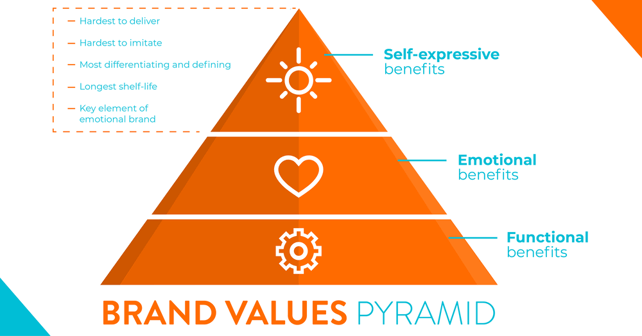
Interbrand’s Brand Value study shows that companies with strong brand alignment and consistency achieve brand values that are typically 20% higher than the industry average.
When Silos Sabotage: The Fragmentation Multiplier Effect
Brands are now recognized as major sources of corporate value, with intangible assets comprising up to 90% of the S&P 500’s value, leading Boards and private equity firms to place greater strategic and financial emphasis on strong brands.
To build a strong brand value and attain improved brand visibility, brand alignment is non-negotiable.
Source: Solmarketing
Let’s say your specialized teams are producing higher-quality individual assets than ever before. Despite that, your brand experience is deteriorating.
Marketing's case studies showcase customer transformation with empathetic storytelling, and the sales pitch decks lead with ROI calculators and competitive matrices.
Don’t blame negligence for this fragmentation. It’s a natural consequence of departmental independence.
Without cross-functional audits, these incremental optimizations compound into strategic misalignment that prospects experience as confusion and existing customers interpret as inconsistency.
The revenue impact manifests in ways traditional RevOps dashboards miss entirely:
- Extended sales cycles as prospects require additional discovery calls to reconcile contradictory value propositions encountered across touchpoints
- Diminished win rates when the brand promise in marketing content doesn't match the transactional tone of sales communications
- Compressed customer lifetime value as onboarding experiences fail to reinforce the emotional resonance that drove initial purchase decisions
- Lost competitive differentiation when your operational messaging becomes indistinguishable from competitors, despite unique positioning in marketing materials
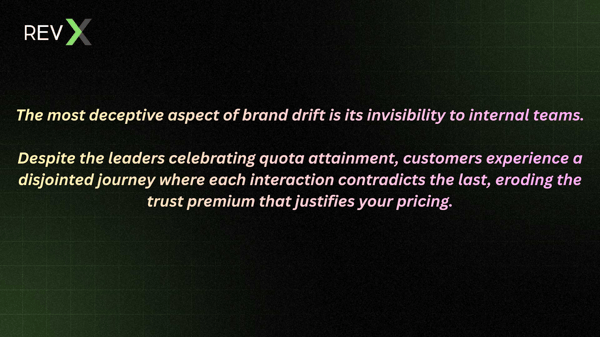
Key takeaways:
- The content creation paradox is about different specialists creating content while still working toward a unified strategic intent.
- Brand fragmentation operates as a multiplier effect. The more touchpoints you create without governance, the more exponentially your misalignment increases.
Building Brand Governance Into Revenue Infrastructure
Your RevOps technology stack automates sequence timing, tracks engagement velocity, and optimizes conversion paths, but it has no mechanism to detect when a sales email contradicts your marketing voice.
This is a critical design gap. CRMs and marketing automation platforms were built to optimize workflow efficiency, not enforce brand coherence. The solution is layering brand governance mechanisms into the systems you already use.
💡Discover why marketing & sales teams must coordinate email outreach
Start by creating custom approval workflows within your existing platforms that flag messaging before it reaches prospects.
In HubSpot or Salesforce, configure required fields that force content creators to tag assets by brand pillar, tone category, and target positioning tier.
Build conditional logic that routes customer-facing content through brand review checkpoints based on deal size, account tier, or campaign visibility. This is the preventive quality control that stops misalignment at the source rather than discovering it through lost deals.
For teams producing high volumes of customized outreach, implement AI-assisted brand checks using tools like Grammarly Business or custom GPT models trained on your approved messaging library.
Configure these systems to score draft content against your voice principles in real-time, flagging deviations before send.
Let’s say a sales rep crafts a personalized email and receives instant feedback: "This draft scores 68% alignment with our consultative tone. Consider replacing transactional phrases like 'circle back' with collaborative language like 'explore together.'"
The technology becomes a brand training mechanism embedded in the daily workflow.
The "One Voice, Many Channels" framework addresses the adaptation challenge, maintaining strategic intent while respecting platform-specific requirements:
- Core positioning truths: The fundamental value propositions and differentiation claims that define your market position
- Functional voice principles (consistent across channels): Tone attributes (conversational vs. formal), sentence structure preferences, terminology standards, and emotional resonance targets
- Tactical channel adaptations (flexible by medium): LinkedIn allows casual contractions and emojis; enterprise email maintains professional structure; sales calls prioritize conversational rhythm over written polish
Beyond technology, create scenario-based messaging playbooks that help customer-facing teams embody brand values during unscripted moments.
Institute quarterly brand alignment audits that evaluate messaging consistency across all revenue-generating touchpoints.
Pull random samples from marketing campaigns, sales emails, demo recordings, support tickets, and renewal conversations.
Score them against your voice framework. Identify drift patterns by team, channel, or campaign type.
Key takeaways:
- Brand governance is the infrastructure that helps prevent revenue leakage through perceptual inconsistency at every customer touchpoint.
- The companies scoring premium deals have made brand coherence a measurable, enforceable component of their RevOps architecture.
Despite evolving, Google has maintained strong brand consistency through a cohesive color palette and design system. Even as its icons change, they remain visually aligned and instantly recognizable, reinforcing brand recall and minimizing confusion.

Source: Adobe
The Invisible Revenue Killer Hiding in Your Tech Stack
Your RevOps dashboards are sophisticated, but they reveal everything except what actually matters to buyers. Nowhere in heaps of data will you find the signal that reveals the disconnect between what your brand promises and how your teams actually communicate.
This isn't about creative consistency for aesthetics, but about revenue leakage through trust erosion. The interdepartmental friction manifests as stalled deals, extended decision cycles, and "we're going with another vendor" emails that never explain the real reason.
The problem compounds because RevOps has trained us to optimize what's measurable.
You A/B test subject lines, refine lead scoring models, and automate nurture sequences with surgical precision. But you're not measuring whether your SDR's cold call positioning contradicts the case study your prospect downloaded yesterday.
This creates what we call the cognitive dissonance tax, the invisible cost of making prospects work harder to understand who you are:
- Prospects have to spend mental energy reconciling conflicting messages instead of evaluating your solution
- Sales cycles get extended as buyers seek additional validation because your touchpoints didn't reinforce each other
- Brand value gets diminished when every interaction feels disconnected from the last
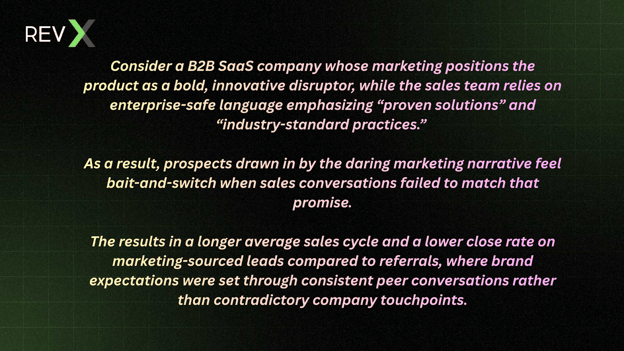
Your tech stack optimizes process velocity, but velocity means nothing when your brand creates friction at every conversion point.
If you would like to know how a tech stack can break interdepartmental silos to help you scale, check out this content piece: How HubSpot-Salesforce integration fuels sales-marketing alignment
Key takeaways:
- Your RevOps infrastructure is blind to the qualitative signals that actually influence buying decisions.
- Every percentage point you gain through process optimization gets eroded by the cognitive dissonance tax when your touchpoints tell conflicting brand stories.
The Brand-Aligned RevOps Playbook: From Competitive Parity to Premium Positioning
Brand alignment becomes revenue acceleration when you treat it as measurable infrastructure rather than creative aspiration
Apple exemplifies equity value creation through alignment, with over $500B of its market cap tied to intangible equity, and its brand alone representing about 20% of total market capitalization, well above book value.
But the transformation requires a diagnostic-first approach that quantifies misalignment before prescribing solutions.
Introduce the Brand Velocity Matrix as the scoring framework that evaluates message coherence across every revenue touchpoint.
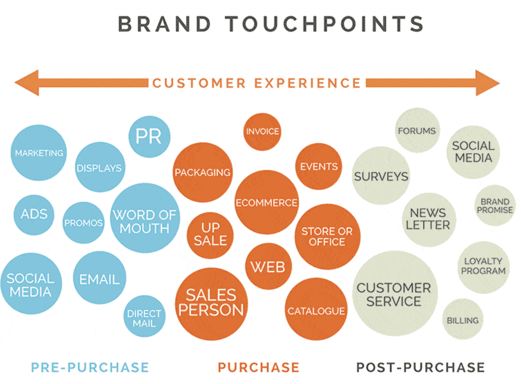
Source: Sentisum
Audit 10-15 assets from each revenue function (marketing ads, sales emails, demo scripts, onboarding sequences, renewal conversations).
Score each asset on four dimensions:
- Strategic positioning consistency (does it reflect core value props?)
- Tonal alignment (does it match voice principles?)
- Narrative continuity (does it build on previous touchpoints?)
- Differentiation clarity (does it reinforce competitive advantages?).
Plot results on a heat map showing which channels and teams create friction versus flow. This reveals your highest-impact alignment opportunities, the touchpoints where misalignment costs you deals.
Next, build your centralized messaging framework using a three-layer architecture that scales without fragmenting. This structure ensures every team can adapt messaging for their context while maintaining strategic coherence that prospects recognize across interactions.
Your three-layer messaging architecture:
- Core positioning truths (10-15 statements): Immutable value propositions, differentiation claims, and market position statements that define what you deliver and why it matters.
- Functional voice principles (8-12 guidelines): Tone attributes (empathetic vs. authoritative), structural preferences (short sentences vs. flowing paragraphs), terminology standards (industry jargon vs. plain language), and emotional resonance targets that create a consistent brand personality
- Tactical channel adaptations (platform-specific): Flexible expression guidelines for LinkedIn (conversational, emoji-friendly), enterprise email (professional structure, data-driven), sales calls (dialogue rhythm, storytelling cadence), support documentation (instructional clarity, empathy emphasis).
Traditional RevOps dashboards focus on quantitative metrics, but brand-aligned RevOps also requires qualitative measurement.
You can do this with a small set of parallel metrics:
- Voice consistency scores: Have cross-functional reviewers rate random content samples each month against your voice principles.
- Brand recall: Use win/loss interviews to ask prospects which messages they remember and whether your positioning felt consistent across touchpoints.
- Sentiment coherence: Analyze language in emails, call transcripts, and support tickets. When customers mirror your vocabulary and framing, it signals message absorption.
- Narrative continuity: Survey prospects at each funnel stage about their understanding of your core value proposition to see whether clarity strengthens or breaks down as they move forward.
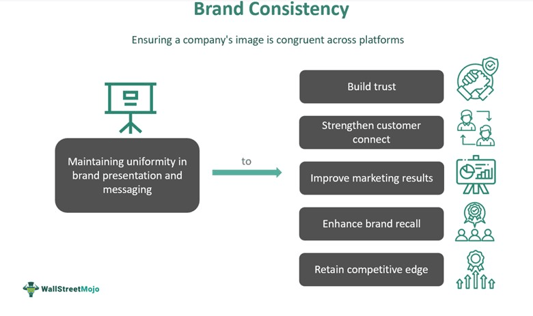
Source: WallStreetMojo
Governance without decision rights creates bottlenecks. A Cross-Functional Brand Council must have clear authority for marketing, sales, and customer success.
Meet monthly to review results, approve updates, and resolve conflicts, with clear escalation from individual guardrails to full council consensus for major shifts.
The execution gap sits with customer-facing teams. Reps know features but struggle to express positioning in real conversations. Close this gap with scenario-based training, recorded and coached against voice principles, so brand guidelines become instinctive under pressure.
Your 90-day brand-aligned RevOps implementation roadmap:
- Days 1-30: Conduct a Brand Velocity Matrix audit across all revenue touchpoints to establish baseline coherence scores and identify the three highest-impact misalignment areas.
Use those findings to develop an initial three-layer messaging architecture with input from cross-functional teams.
- Days 31-60: Implement custom approval workflows in CRM and marketing automation tools and launch AI-assisted brand checks for high-volume outreach.
Create scenario-based training for customer-facing teams and establish a Cross-Functional Brand Council with clear decision rights.
- Days 61-90: Deploy qualitative brand metrics alongside traditional KPIs and run the first monthly brand alignment audit.
Pilot training with one sales pod and one CS team, measure early impact on voice consistency and deal velocity, then scale what works across the organization.
Key takeaways:
- Brand-aligned RevOps turns operational efficiency into a competitive advantage by ensuring every customer interaction reinforces your market position.
- While competitors optimize in isolation, you’re accelerating trust by turning brand coherence into pipeline velocity and durable premium positioning.
The bottom line is that RevOps can optimize activity, but only brand-aligned RevOps amplifies impact. And then, every touchpoint becomes a reinforcement of value, every message compounds authority, leaving competitors scrambling.
But can your teams speak one language yet?