

 Salesforce
 HubSpot
 Claude
.png?width=58&height=58&name=Frame%202087327944%20(1).png) GA4
GA4
.png?width=58&height=58&name=Frame%202087327944%20(2).png) Marketo
Marketo
.png?width=58&height=58&name=Frame%202087327944%20(3).png) Audit Fox
Audit Fox
 Services


You face a stark reality when manual processes that built your career are becoming their biggest limitation.
Cheer up, it’s not your fault that now the market demands speed and precision that human execution simply cannot deliver.
And you are overwhelmed with operational tasks while strategic opportunities get away. The current routine leaves you with minimal time for strategic revenue optimization, which drives real business impact.
AI agents represent the solution to this operational paradox.
These autonomous systems execute multi-step revenue processes across platforms, analyze patterns to predict outcomes, and optimize operations without human intervention. They handle the operational burden while elevating your role to strategic revenue architect.
And this transformation creates two distinct paths for RevOps professionals.
Those who embrace AI agents gain strategic leverage, operating at speeds and scales impossible through manual processes.
And unsurprisingly, those who resist find themselves trapped in increasingly complex operational firefighting as automation accelerates around them.
Your next career move depends on understanding how AI agents fundamentally reshape revenue operations and positioning yourself on the right side of this shift.
The RevOps Reality Check: Why Manual Processes Are Hitting a Wall
The modern revenue operations landscape resembles a high-stakes juggling act performed on a tightrope.
RevOps professionals manage an overwhelming number of tools in their tech stack, each generating data that requires manual integration, analysis, and action. As a result, manageable complexity has evolved into an operational nightmare that threatens strategic effectiveness.

The tool proliferation problem
Each platform operates in isolation, creating data silos that demand constant manual bridging.
- Manual data exports consume hours daily for most RevOps teams
- Cross-platform reporting requires rebuilding the same analysis across multiple systems
- Data inconsistencies emerge when information updates in one system but remains stale in others
- Strategic insights get buried under operational maintenance tasks
The cognitive load of managing these disconnected systems leaves little mental capacity for strategic thinking. RevOps professionals become data janitors rather than revenue strategists.
Scale breaks everything
The linear relationship between data volume and processing time creates exponential complexity as organizations grow.
Consider lead scoring as an example. A startup might manually review 20 leads weekly, applying intuitive scoring based on engagement patterns.
Scale that to 2,000 leads weekly, and manual scoring becomes impossible. The same RevOps professional who provided nuanced insights for 20 leads can only apply basic rules to 2,000.

Also, talking of leads, learn how lead scoring can help you identify your next customer
The speed mismatch
Modern buyers move faster than manual RevOps processes can track. A prospect researches your solution, engages with content, requests a demo, and makes a purchasing decision within days. Meanwhile, your manual lead scoring, routing, and nurturing processes operate on weekly cycles.
This speed mismatch creates revenue leakage at every stage.
💡A useful resource: Revenue leakage is the silent killer, until RevOps calls it out
Market pressure intensifies
Competitive dynamics require faster decision-making than manual processes can accommodate. Companies using automated revenue operations respond to market changes in hours, while manual operations require days or weeks.
The gap widens continuously as those who rely on manual RevOps fall further behind competitors who have automated operational tasks and elevated their teams to strategic roles.
Key Takeaways: Manual RevOps processes create operational bottlenecks that prevent strategic value creation, while market dynamics demand speed and precision that human execution cannot deliver at scale.
Intelligence-Driven Operations: How AI Agents Transform Revenue Management
A survey by IBM and Morning Consult of 1,000 enterprise AI developers found that 99% are actively exploring or building AI agents. This highlights how quickly agent-based AI is becoming a top enterprise priority.
AI agents don’t behave like dashboards or automation rules. Rather, they function as autonomous operators that understand goals, continuously monitor systems, and take action across tools without waiting for human instruction.
Instead of flagging problems, they resolve them. And, instead of reporting insights, they act on them.
Autonomous execution across revenue workflows: AI agents can manage end-to-end revenue processes. But their real power is coordination.
Unlike manual workflows, they operate across the entire revenue stack with full context, keeping complex processes seamless and aligned.
Predictive insight replaces reactive analysis: Because AI agents operate continuously, they spot patterns that human teams often catch too late.
Instead of waiting for month-end reviews, they forecast revenue risks, highlight opportunities, and recommend adjustments in real time, turning revenue management from hindsight analysis into proactive growth shaping.
💡Discover how you can use demand forecasting to boost the bottom line
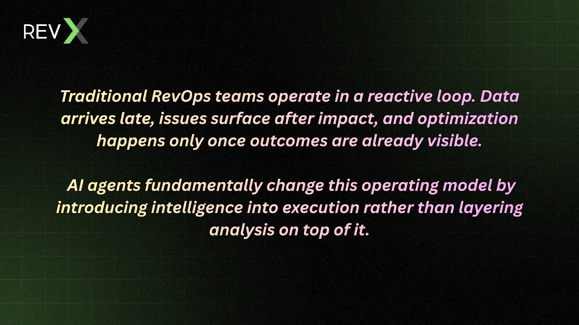
Continuous optimization becomes the default: Most RevOps optimization today happens in cycles, and AI agents compress them into real-time. They test small changes, measure impact, and reinforce what works automatically.
This creates a compounding effect. Processes improve continuously rather than episodically, and revenue systems adapt as conditions change rather than lag behind them.
A relatable scenario: Imagine a mid-market SaaS company running inbound, outbound, and partner motions simultaneously. Traditionally, RevOps notices pipeline slippage during the monthly review.
By the time routing issues, lead quality shifts, and follow-up delays are identified, several weeks of opportunity are already lost.
With AI agents in place, the system detects reduced response rates within days. It identifies which segments are affected, adjusts routing logic, flags capacity constraints, and recommends changes to sequencing automatically.
Strategic elevation of the RevOps role: As agents absorb operational execution, RevOps professionals move upstream. Their value shifts from managing data and workflows to designing revenue systems, defining success criteria, and guiding intelligent automation.
Key Takeaway: AI agents shift RevOps from reactive reporting to proactive revenue management through autonomous execution and continuous optimization.
The Operational Advantage: Real-World Impact of AI Agent Implementation
Scenario 1: Pipeline risk is corrected before leadership notices it
In a high-growth company, pipeline conversion begins slipping in one region. Traditionally, this shows up in a monthly forecast call, followed by weeks of analysis and debate.
With AI agents in place, the system detects abnormal stage duration patterns within days. The agent correlates the slowdown with lead source quality, SDR capacity, and follow-up timing.
It automatically adjusts routing rules, flags the impacted segment, and updates forecast assumptions. By the time RevOps reviews the change, the system has already stabilized conversion.
While RevOps didn’t report the issue, the system already resolved it.
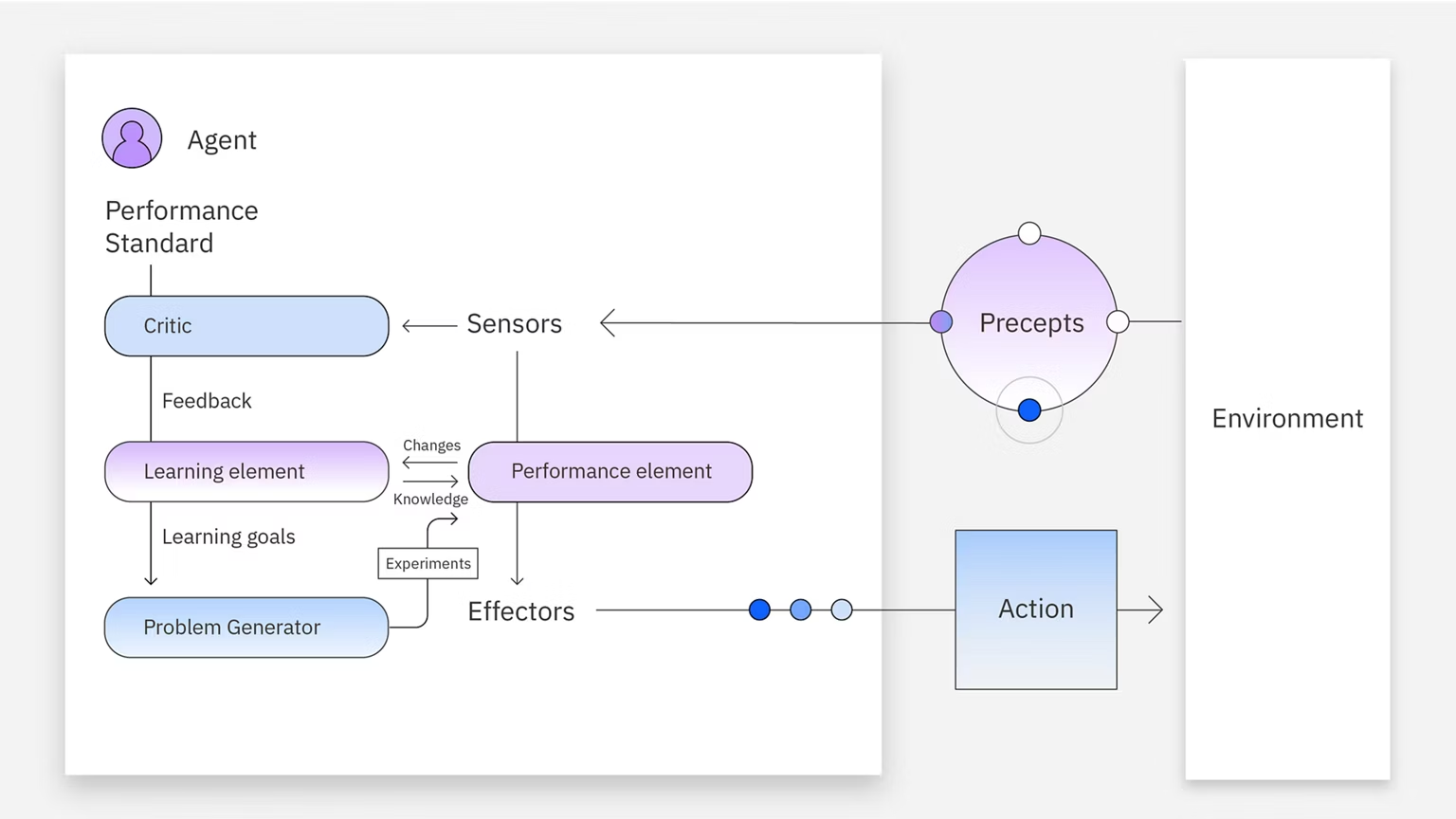
An example of a learning-based AI agent. Source: IBM
Scenario 2: Forecast accuracy improves without new models
Forecast calls often break down because inputs change faster than spreadsheets can keep up.
AI agents monitor deal behavior continuously. When close dates slip, engagement drops, or deal momentum changes, the agent updates forecast probabilities in real time. RevOps no longer has to chase updates across teams.
Scenario 3: Cross-platform chaos disappears
Most RevOps teams live with silent inconsistencies between CRM, marketing automation, and customer success tools. Data is “mostly right,” until it isn’t.

AI agents operate across systems simultaneously. When lifecycle stages conflict, ownership mismatches occur, or fields drift out of sync, the agent reconciles them automatically. No tickets, manual audits, or broken downstream reports are involved.
RevOps shifts from fixing data to defining rules for how data should behave.
Scenario 4: Personalization scales without complexity
Revenue teams want segmentation that reflects behavior, intent, and context. Manual systems force trade-offs between accuracy and scalability.
AI agents dynamically segment accounts and contacts based on live signals. They adjust scoring, routing, and engagement paths in parallel across hundreds of segments.
Thus, RevOps doesn’t have to build complex logic trees. It just needs to define principles, and then the agent handles execution.
As a result, personalization is no longer a project as it becomes a default state.
💡Learn how AI-powered personalization at scale is redefining Marketing Ops
Scenario 5: Market shifts trigger system response
When pricing sensitivity changes or a new competitor enters the market, most organizations react late. By the time trends are visible in dashboards, revenue impact is already locked in.
AI agents detect early signals through engagement patterns, win-loss changes, and cycle length shifts. They adjust assumptions, surface risks, and recommend changes to strategy while there’s still room to act.
RevOps becomes the function that anticipates change instead of explaining it.
Key takeaway: AI agents redefine RevOps by acting inside revenue systems, not reporting on them. The real advantage is the ability to correct, adapt, and optimize revenue operations in real time.
Your Strategic Inflection Point: When Revenue Systems Start Solving Problems
The real promise of AI agents is system-level problem solving that happens before issues escalate.
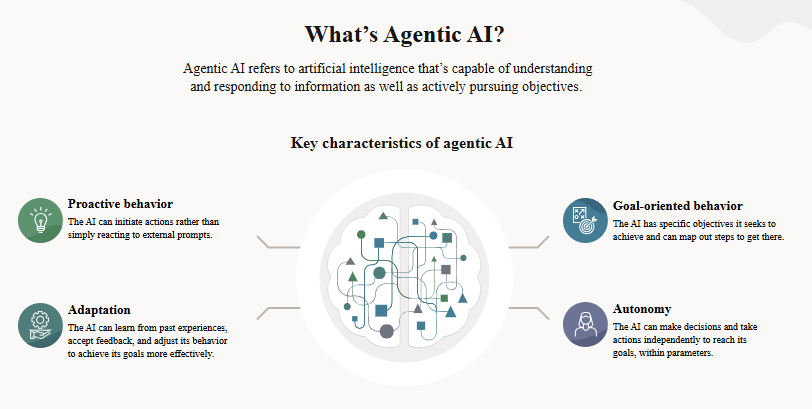
Agentic AI goes beyond monitoring. It acts autonomously to prevent problems before they surface.
It detects anomalies, enforces rules, and adjusts workflows in real time, all without waiting for human intervention. The result is that issues are resolved where they form, not where they appear.
Source: Oracle
Take revenue leakage as an example. Let’s say the discounting rules drift by region, approval paths vary by manager, and margin erosion shows up weeks later, long after deals are signed.
AI agents monitoring deal patterns can:
- Detect pricing and discount anomalies in real time
- Enforce guardrails automatically across regions
- Flag risky deal structures before they close
Instead of post-hoc margin analysis, RevOps gets live protection embedded into the revenue flow.
Another hidden problem is capacity imbalance. Most teams struggle because effort is misallocated.
AI agents continuously observe workload distribution across reps, territories, and deal sizes. When capacity drifts away from opportunity, the system:
- Rebalances assignments dynamically
- Adjusts prioritization based on deal quality
- Prevents burnout in high-pressure segments and neglect elsewhere
Thus, RevOps stops reacting to attrition and starts preventing it.
But in some cases, forecasting breaks down in quieter ways. For instance, late-stage deals look healthy but stall silently, and renewals assumed to be safe lose engagement without triggering alerts.
In this scenario, AI agents track behavioral signals that stage-based models ignore. When confidence erodes, they:
- Adjust projections dynamically
- Surface hidden risk earlier
- Trigger intervention while outcomes are still flexible
Hence, forecasts stop being narratives and start behaving like early-warning systems.
Expansion is another area where agents quietly outperform manual processes. Upsell and cross-sell signals live in usage data, support interactions, and adoption patterns that humans don’t monitor continuously.
AI agents connect these signals and:
- Identify expansion readiness in real time
- Coordinate action across sales, marketing, and customer success
- Reduce reliance on memory, timing, or manual review
Even governance and compliance shift upstream. Instead of periodic audits and cleanup cycles, AI agents enforce consistency continuously. Field usage, lifecycle movement, and attribution logic are monitored as living systems.
Across all these applications, the pattern is the same. Problems are addressed where they form, not where they surface.
Thus, RevOps no longer spends its energy diagnosing issues after revenue is impacted. It designs environments where issues are resolved automatically. The function is valued less for how well it responds to problems and more for how rarely problems appear.
Bottom line is, the next era of RevOps will be defined by how many revenue problems your systems solve before your team ever sees them.
Soon, the most important RevOps question won’t be what we are fixing. Rather, it will be how much of the revenue engine is already fixing itself.