

 Salesforce
 HubSpot
 Claude
.png?width=58&height=58&name=Frame%202087327944%20(1).png) GA4
GA4
.png?width=58&height=58&name=Frame%202087327944%20(2).png) Marketo
Marketo
.png?width=58&height=58&name=Frame%202087327944%20(3).png) Audit Fox
Audit Fox
 Services


Something strange is happening inside modern revenue organizations. Senior RevOps titles are appearing on org charts, but revenue decisions are still being made the same way they were years ago through meetings, escalations, and last-minute interventions.
The contradiction is hard to ignore because while leaders are being hired to think strategically, their calendars are filled with tactical clean-up.
Irony is, they’re expected to shape revenue systems, but end up spending most of their time explaining why those systems didn’t behave as expected.
Basically, the authority exists, but the leverage doesn’t.
When organizations elevate a role without defining what that role is meant to change, strategy collapses into support. RevOps leaders become highly paid stabilizers of complexity rather than designers of revenue advantage.
And the fact that this aspect goes under the carpet is alarming. The title signals progress, and even the activity looks productive, but nothing fundamental shifts in how revenue decisions are owned, prioritized, or improved.
So, ask yourself, if strategy isn’t clearly mandated, what exactly did the title upgrade accomplish?
When senior titles create the illusion of progress
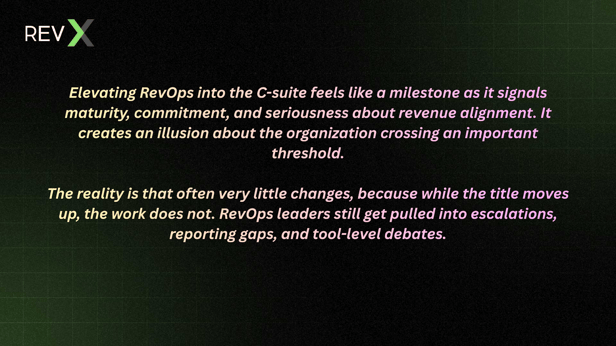
Strategic conversations happen less often than expected, and when they do, they rarely translate into structural change.
Harvard Business Review reports that 67% of strategies fail, while Kaplan and Norton found that up to 90% of strategic plans fall short in execution.
But the organization feels reassured by the presence of a senior role, even as execution patterns stay intact.
This illusion of progress is dangerous because it reduces urgency. Once a role exists, leadership assumes the problem is being handled. But without a clear mandate, the role absorbs responsibility without gaining leverage.
Several signals indicate when this is happening:
- Strategic RevOps leaders spend most of their time unblocking day-to-day issues
- “Strategy” discussions that end in dashboards instead of decisions
- Revenue problems are framed as execution failures rather than system design flaws
- Senior leaders consulted often, but were rarely empowered to redesign how the work flows
What’s really happening is substitution in which the organization replaces structural change with symbolic elevation. Instead of redefining how revenue decisions are made, it adds a senior translator to help existing systems cope with complexity.
Over time, this creates a subtle trap. The RevOps leader becomes indispensable to keeping things running, which makes it harder to step back and redesign the system itself. Tactical success crowds out strategic intent.
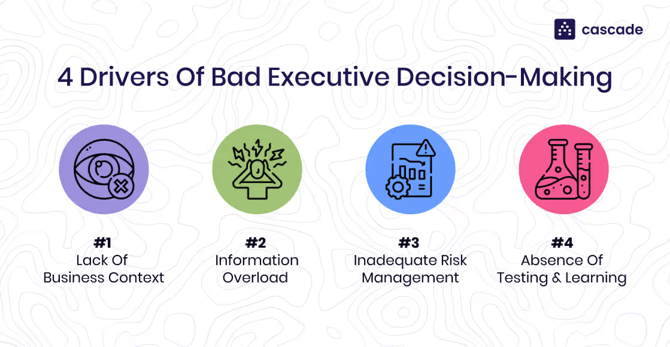
Source: Cascade
💡An insightful resource you’ll find valuable - From reactive to predictive: The RevOps maturity curve
Key takeaway: A senior title creates confidence, not capability. Real progress only begins when elevation is paired with a clear mandate to change how revenue decisions are owned and executed.
How strategic roles get trapped in execution
Authority sounds powerful until you try to use it without a mandate. Many RevOps leaders are given visibility, influence, and access, but not the explicit right to decide what changes, what stops, and what gets redesigned.
The result is a role that can advise broadly but act narrowly. And soon, the strategy breaks down.
Without a defined charter, every request feels legitimate. Each task is reasonable in isolation, yet together they consume the leader’s time and attention. And your strategic work becomes something that happens “after things settle down,” which they never do.
The trap is reinforced by how success gets rewarded. Tactical responsiveness delivers immediate relief and visible wins.
However, structural change requires patience, disruption, and trade-offs that rarely show impact in the same quarter. Over time, even the most senior leaders adapt to what the system reinforces.
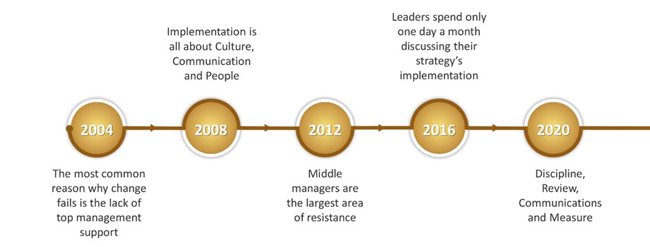
Source: Bridgesconsultancy
You can observe this pattern clearly when:
- Strategic initiatives get postponed in favor of urgent escalations
- Decision rights remain distributed, even as accountability centralizes
- RevOps leaders influence outcomes but don’t own them
- Long-term redesign is discussed but never prioritized
The irony is that authority without mandate increases workload while reducing impact. Leaders are expected to “own revenue outcomes” without the ability to change the mechanisms that produce them. Soon, your strategy turns into commentary, and execution absorbs the rest.
Until the mandate is explicit, defining what the role can redesign, enforce, and deprioritize, senior RevOps leaders will continue operating as highly skilled executors rather than system architects.
💡An insightful conversation from RevOps leaders, for RevOps leaders. - Kanad & Shreyansh on AI in RevOps, key KPIs, and other insights
Key takeaway: Authority enables presence, but mandate enables change. Strategic roles remain tactical until decision rights and ownership are clearly defined.
The hidden cost of misdefined strategic roles
Consider this scenario: The RevOps leader walks out of yet another executive meeting knowing exactly what needs to change. After all, the issues were clear, and the patterns were obvious, and everyone nodded.
Within a week, stagnation sets in as recurring lead qualification debates undermine forecast confidence. The leader starts preparing the next deck, already aware that it will tell the same story with new numbers.
At some point, the question shifts from why isn’t this working to how long can this keep repeating. And that’s when strategy transforms into endurance.
When strategic roles lack definition, systems keep running while the cost accumulates behind the scenes, spreading across speed, confidence, and credibility in leadership.
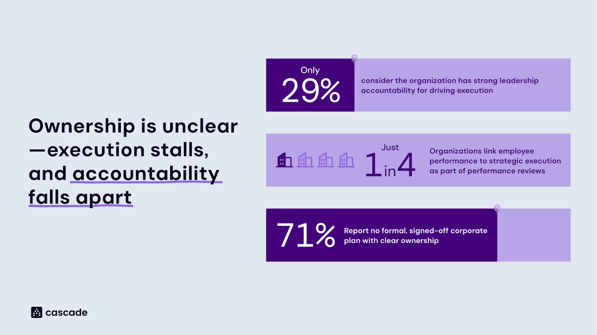
Source: cascade
The first casualty is decision quality. When RevOps leaders don’t own the system, decisions remain distributed and inconsistent. Teams optimize locally, and trade-offs get negotiated countless times.
The same questions resurface in different forums because no one is empowered to resolve them structurally.
Source: Forbes
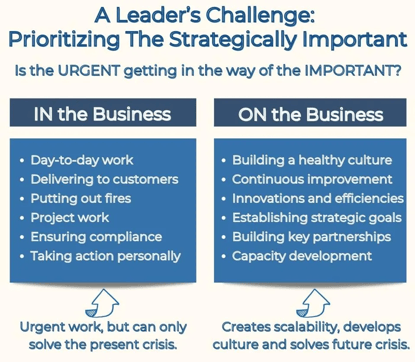
Next comes organizational drag, in which strategic work requires focus and interruption, and the tactical work demands constant availability. When leaders are pulled into execution loops, long-term redesign never gets airtime, and initiatives stall from exhaustion.
Over time, this ambiguity reshapes behavior:
- Strategy becomes synonymous with reporting, not redesign
- Leaders are valued for responsiveness instead of leverage
- Structural problems get managed instead of removed
- Confidence erodes as the same issues repeat quarter after quarter
The most expensive impact is talent loss. High-caliber RevOps leaders burn out from knowing what should change and being unable to change it. When identity stays blurred, retention suffers and momentum resets.
By the time organizations recognize the problem, revenue maturity gets stifled. Yes, the role and capability still exist, but the system never evolved to use them.
Key takeaway: Undefined strategic roles create compounding drag. Without clarity on ownership and leverage, organizations pay for slower decisions, repeated problems, and lost leadership potential.
Redefining the RevOps mandate: from support leader to revenue architect
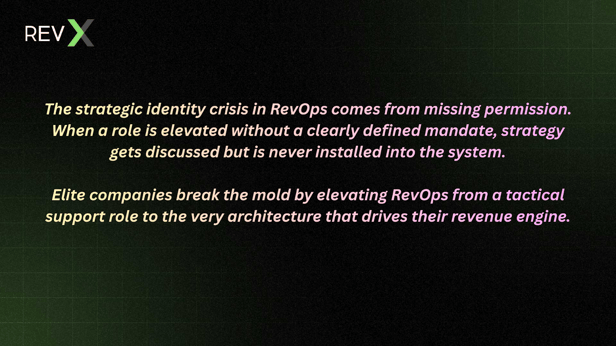
The mandate is explicit: RevOps is responsible for designing how revenue decisions are made, enforced, and improved over time. Once that clarity exists, strategic work stops competing with operational noise.
This shift reframes what leadership actually expects from RevOps. The role is now measured by how well it shapes the environment in which those teams operate. The difference shows up in what RevOps is allowed to do.
Instead of reacting to symptoms, RevOps leaders are empowered to redesign the mechanisms that create them. Strategy becomes tangible because it is embedded into workflows, incentives, and rules rather than debated in meetings.
A self-assessment for leaders: Is your RevOps mandate truly strategic?
As a leader, it’s easy to feel disheartened, but you’re not alone in facing these challenges.
In fact, 2 out of 3 CEOs openly admit they lack the capabilities needed to create real value. And perhaps even more concerning, a staggering 4 out of 5 executives confess that their company doesn’t fully understand their overall strategy.
This is a wake-up call for even the highest levels of leadership, as they struggle with clarity and execution, there’s a critical opportunity for growth and change.
Use this checklist to pressure-test whether RevOps is operating as an architect or a stabilizer:
- Decision ownership: Does RevOps have clear authority over how prioritization, qualification, forecasting, and escalation decisions are designed?
- System design rights: Can RevOps redesign workflows, definitions, and incentives when they no longer serve revenue efficiency?
- Trade-off authority: Is RevOps explicitly empowered to remove processes, deprecate tools, and say no to complexity?
- Enforcement mechanisms: Are operating rules enforced structurally, or do they rely on alignment and goodwill?
- Outcome-based success metrics: Is RevOps measured on system behavior and revenue efficiency, not volume of reports or requests fulfilled?
If most of these answers are unclear, unfortunately, the role may be senior in title but limited in leverage.
We recommend taking this a step further and treating RevOps as a design discipline, reviewing revenue systems the same way you review product systems, for usability, scalability, and failure modes.
Remember, your strategy becomes something that is built, tested, and refined, not something that lives in decks.
Once the mandate is clear, the effect cascades, your decision-making speeds up, and recurring issues disappear instead of resurfacing. And then, you, as a leader, spend less time explaining performance and more time shaping it.
Key takeaway: RevOps becomes strategic when the mandate is explicit and enforceable.
Organizations that empower RevOps to design and govern revenue architecture turn senior titles into real leverage. And finally, stop paying the hidden cost of strategic ambiguity.
So, the bottom line is, the strategic identity crisis in RevOps is about mandate. When authority is granted without clarity on what must change, leaders get trapped in execution, and systems stay the same.
Your organization must define RevOps as a design role, which raises a question about how many senior titles in your org are actually shaping outcomes, and how many are just stabilizing complexity.